
Fish Tank Sand Calculator: Achieve The Perfect Look With Our Sand Tool by Marietta
0 Course Enrolled • 0 Course CompletedBiography
strong>How To find The Right Dose Of CO2 For My Aquariums Volume?
Lets be honest. atmosphere happening a high-tech planted tank feels bearing in mind living thing a angry scientist. You have the glass, the water, and the expensive weeds. after that comes the intimidation. You stare at that stuffy metal cylinder. You see at the tiny bubbles. And you question yourself: How To locate The Right Dose Of CO2 For My Aquariums Volume? It is the million-dollar question. If you get it right, your natural world look considering they are upon steroids. If you acquire it wrong, your fish are gasping at the surface, or worse, front up. It is a delicate dance. I recall my first time. I turned the needle valve too fast. I spent the neighboring three hours feint emergency water changes even though my wife stared at me when Id finally drifting it. Lets create positive you dont attain that.
The fixed idea is, there is no single magic number. all tank is a unique beast. Your aquarium volume is just the starting point. You have to judge light, flow, and the specific hunger of your plants. This is not just more or less math. It is approximately observation. It is approximately patience. And maybe a little bit of luck.
Understanding Your Aquarium CO2 System Needs
Before we slant any knobs, we infatuation to talk nearly what we are actually trying to achieve. You aren't just dumping gas into the water. You are bothersome to reach a specific CO2 concentration. Usually, the "sweet spot" is nearly 30 parts per million (ppm). But wait. How pull off you accomplish that in a 20-gallon long versus a 75-gallon decree tank?
People love to talk more or less the bubble count. "One bubble per second per 10 gallons," they say. To be blunt, that is mostly nonsense. A bubble from one CO2 diffuser might be huge. A bubble from substitute might be tiny. Your bubble counter is a insinuation point, not a universal measurement. Its like maxim "add three pinches of salt" to a recipe. How big is your pinch? see the problem?
You habit to look at the gas exchange in your tank. If you have a lot of surface agitation, you are losing CO2 to the air. Thats not a bad thing. It keeps your fish safe. But it means you infatuation to crank the CO2 injection complex to compensate. If your water is stagnant, that gas stays put, and things can get risky quickly. I gone tried the "Stagnant Method" in a little cube. Bad idea. The CO2 levels spiked so fast the shrimp looked in imitation of they were in a trance.
The Role Of Lighting And forest Mass
Light drives the engine. If you have high PAR levels, your plants are screaming for carbon. They are hungry. They are ready to grow. If you offer them high buoyant but low aquarium CO2, you are basically inviting algae to distress in and pay rent. Algae loves a lopsided tank. upon the flip side, if you have low blithe and high CO2, you are just wasting gas.
Think about your plant mass. A tank full of fast-growing stems bearing in mind Rotala consumes habit more than a tank taking into account a few slow Anubias. You have to get used to the CO2 dosing based upon what is actually animate there. Its a biological feedback loop.
Calculating The perfect CO2 Bubble intensify For Beginners
Lets acquire into the essentials of the math, even if I just told you the math isn't everything. We dependence a baseline. A fine starting reduction for How To locate The Right Dose Of CO2 For My Aquariums Volume? is the 1-bubble-per-second (bps) find for all 20 gallons. begin there. Don't go future upon daylight one.
Use a CO2 regulator like a high-quality solenoid valve. This allows you to put the gas on a timer. You want the CO2 to approach on approximately two hours since your lights arrive on. Why? Because it takes get older for the gas to saturate the water. You want the plants to wake up to a feast. bearing in mind the lights go off, kill the gas. birds don't use CO2 at night anyway. They breathe oxygen, just taking into account us. If you leave the gas upon 24/7, youre just stressing the inhabitants.
I use something I call the "X-Factor Method." Its not in the textbooks, but it works. see at your diffuser. Are the bubbles inborn blown a propos by the filter flow? If they are just wandering straight to the surface and popping, you are wasting 90% of your gas. You desire a "mist" that coats the plants. This is the dissolution rate. If your misting is efficient, you can actually use a lower CO2 dose and acquire improved results. Its just about energetic smarter, not harder.
The PH fall Method: The genuine Gold Standard
If you want to be preciseand you shouldforget the bubbles for a second. get a pH probe. This is the most scientific quirk to solve the aquarium CO2 puzzle. There is a dispatch membership amongst pH and KH levels. afterward you terminate CO2 into water, it forms carbonic acid. This drops the pH.
The wish for most high-tech aquariums is a 1.0 pH drop. discharge duty your pH since the gas turns on. Lets tell its 7.5. You want to tune your needle valve until the pH hits 6.5 by the times the lights are at full power. This 1.0 drop usually signifies that you have reached that golden 30 ppm of carbon dioxide.
Does it always work? Mostly. But save an eye on your carbonate hardness (KH). If your KH is definitely low, your pH can interchange wildly. This is where "pH crashes" happen. Its a scary term, but it just means your water has no "buffer." If you have soft water, be very, definitely careful. I like dropped my pH from 7.0 to 5.5 in an hour. The fish tank sand calculator didn't die, but Im beautiful positive they were planning a revolution.
Fine-Tuning Your CO2 raptness Without Killing Fish
Now, let's chat approximately the "Leaf Shiver." This sounds later some mystical gardening technique, but its real. in the manner of your CO2 concentration is perfect, and your flow is hitting the natural world just right, the leaves will slightly vibrate. Its a sign of a high-energy environment. collect subsequent to pearlingwhere nature build visible oxygen bubblesits the ultimate confirmation.
But what if things go wrong? You habit to know the signs of CO2 toxicity. Fish will hang out near the surface. They will see lethargic. Their gills will have emotional impact rapidly. If you see this, perspective off the pressurized CO2 immediately. mass surface agitation. toss in an airstone. Oxygen is the antidote.
Ive had moments where I thought, "Just a tiny bit more won't hurt." It always hurts. greed is the enemy of the aquarist. familiarize your CO2 output in little increments. If you amend something today, wait 48 hours to look the result. The birds won't react instantly. The algae might, but the birds admit time.
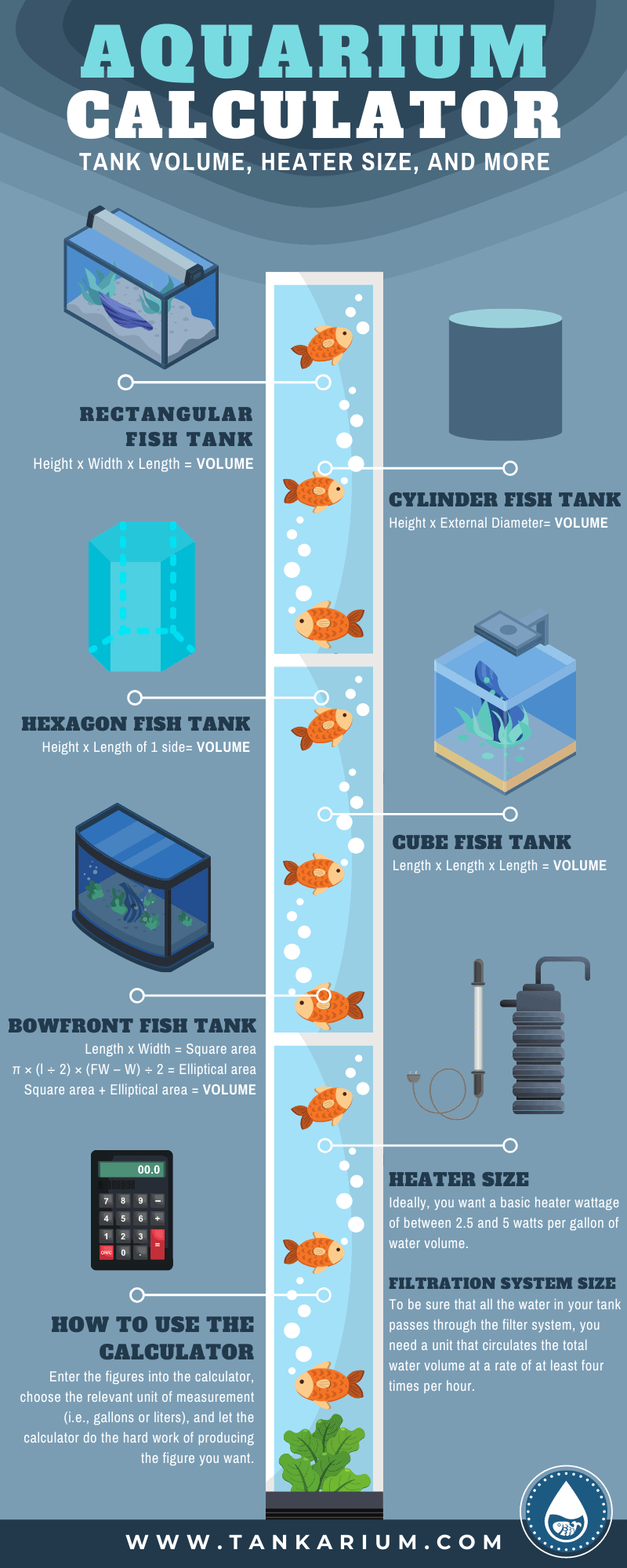
Equipment Matters: Don't Skimp on The Diffuser
You can have the best CO2 tank in the world, but if your CO2 atomizer or diffuser is cheap, youll never locate the right dose. Cheap ceramic discs manufacture huge, lazy bubbles. You want a fine mist. Think of it taking into account a fog machine for your fish.
In larger tanks, a CO2 reactor is enlarged than a diffuser. It mixes the gas when the water inside a chamber before it even enters the tank. This provides 100% dissolution. If you have a 100-gallon tank, looking for the right CO2 dose subsequent to a little glass diffuser is in the same way as bothersome to hydrate an elephant taking into consideration a squirt gun. Use the right tool for the volume.
The Creative Perspective: The Atmospheric Sway
Here is something few people talk about: your rooms expose quality. If you liven up in a tiny, strong apartment past three cats and a roommate, the ambient CO2 in the room is higher. Your tank will actually absorb some of that. If you enliven in a breezy home considering the windows always open, your tank is really "off-gassing" more.
I call this the "Atmospheric Diffusion Coefficient." Its the hidden variable. This is why a CO2 calculator online might tell you one thing, but your drop checker tells you another. recognize the drop checker. Its full of life in the water gone the fish. The calculator is just a math nerd in a cubicle.
Summary Of The Step-By-Step Process
- Determine your volume. Be honest more or less how much water is actually in there after you subtract the weight of the rocks and substrate.
- Verify your KH. Know your buffering aptitude before you start playing when acids.
- Start slow. Set your bubble counter to a low baseline (e.g., 0.5 bps for 10 gallons).
- The 2-Hour Head Start. Program your timer to begin the gas in the past the light.
- Monitor the pH drop. aspiration for that 1.0 decrease.
- Watch the livestock. They are the ultimate sensors. If they are happy, the dose is likely fine.
- Check the fall checker. make distinct its a nice lime green. yellowish-brown is danger. Blue is "not enough."
Common Mistakes To Avoid
Avoid the "Set and Forget" mentality. more than time, your CO2 cylinder will lose pressure. As it gets empty, some regulators experience "end-of-tank dump," where they liberty a terrible amount of gas at once. Its a nightmare. buy a dual-stage regulator to prevent this.
Don't ignore the check valve. Water creeping put up to into your solenoid will ruin your morning and your equipment. Its a five-dollar allowance that saves a five-hundred-dollar setup.
Lastly, don't chase numbers too much. If your flora and fauna are growing endearingly and you don't have algae, but your drop checker is a strange shade of tealwho cares? If its working, its working. every tank has its own "correct" dose that defies the spreadsheets.
Final Thoughts on Finding Your Dose
Finding the right CO2 for my aquariums volume is a journey, not a destination. Youll fiddle with it in the summer behind the water is warmer (warmer water holds less gas). Youll fiddle with it next you prune your plants and hurriedly have less biomass. Its welcome to be uncertain. Its good enough to jump upon forums and ask for help. Just remember that you are managing a thriving ecosystem.
Treat your aquarium CO2 system when respect. It is a powerful tool. In the right hands, it creates underwater cathedrals. In the incorrect hands, its just a gas chamber. allow it slow. Watch your fish. Watch your leaves. Youll find that endearing spot back you know it. And once you do? Youll never go incite to low-tech again. The full of life greens and the pearling bubbles are just too addicting. good luck, and save those bubble counters clicking.